Where the Blacktop Ends
  • Home
  • About Me
  • Mother Culture
  • Homeschool Resources
  • Hand Crafting

When children love to learn

6/16/2014

2 Comments

 
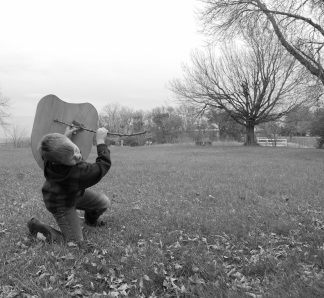
If we want our children to stay hungry for knowledge, remain interested in questioning, enjoy the wonder of discovery, then we must leave them some clutter-free hours for friendship, the great out-of-doors, the rich world of imagination, and the satisfaction of the skilled use of art supplies, music, dance, wood and clay. 
quote here
Picture
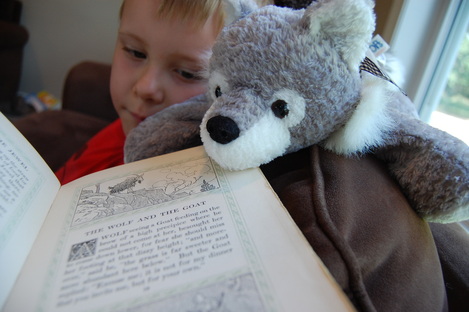
We're reading the book When Children Love to Learn (link above) for our summer book study. 
Several moms, a bunch of kids meeting at a park to chat and play. 
It's a lovely way to spend a summer morning here and there.  
Reading a good book with the companionship of others is wonderful, don't you think? 
2 Comments

Happy people

1/21/2014

7 Comments

 
Picture
"Truly parents are happy people to have God's children lent to them." 
-Charlotte Mason
Picture
Picture
Picture
Picture
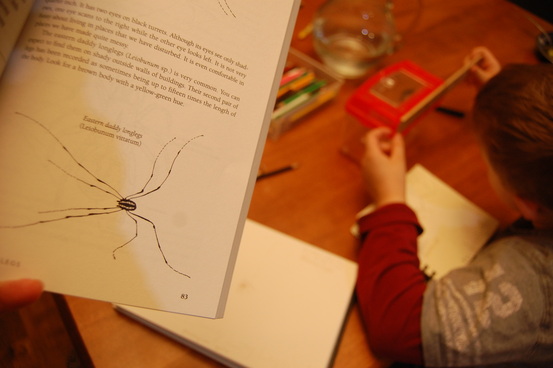
Winter nature study- daddy long legs from the basement
Picture
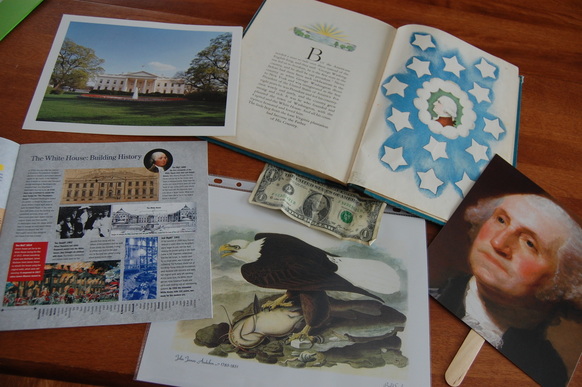
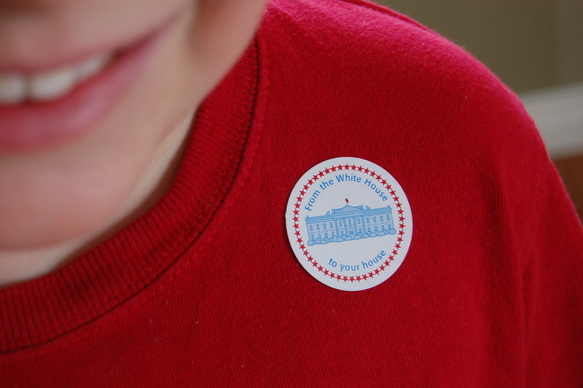
Studying George Washington, opening an envelope from the White House, and viewing Audobon's Eagle painting
Picture
Picture
7 Comments

Hibernate

1/5/2014

3 Comments

 
With the current temp at -11 and windchill at -37 we've mostly been entertaining ourselves indoors this Christmas and New Year, with the exception of visits with friends and an occasional abbreviated jaunt through the woods or down to the mailbox. The new child-sized snow shovel is already lost in a drift somewhere, sigh. Along with the stories, stories and more stories and a few new presents to play with, here's what's been filling the little minds and hands and tummies at our house. 
Picture
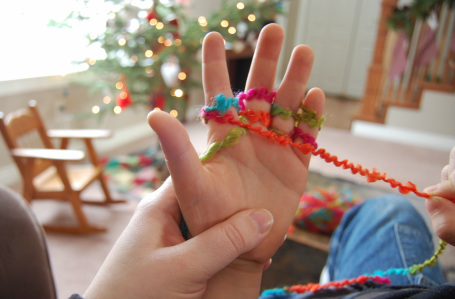
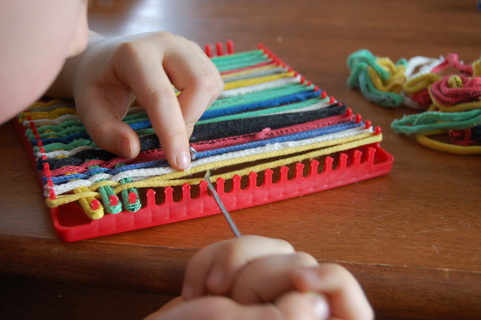
"Mom, can I please learn to finger knit?" 
He picked some chunky rainbow yarn out of my stash and sat on my lap.
We watched and paused this video several times. 
It was a lovely way to spend a frigid afternoon. He's been making 'scarves' and fake beards and moustaches for imaginative play ever since!
Picture
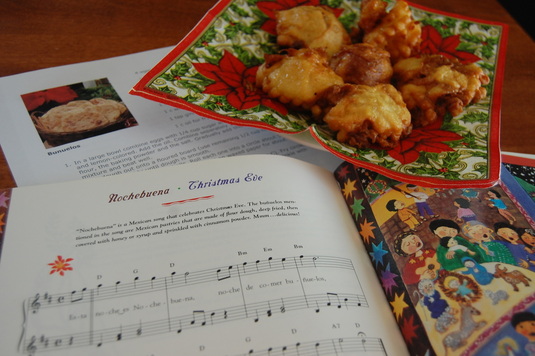
Singing Noche Buena and cooking Bunuelos 
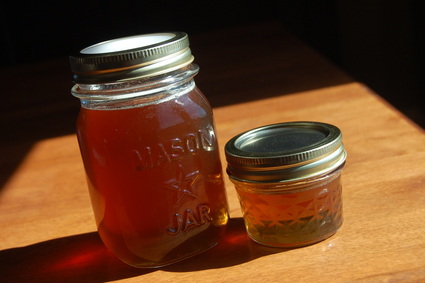
(Mexican Christmas cookies meaning 'puffs of air') We drizzled ours with honey. 
Picture
Learning to weave with a similar kit to this. 
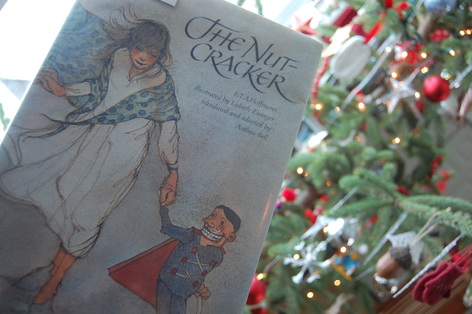
Picture
After this read aloud, since we couldn't go in person, we went to 
the Nutcracker Balet via youtube with popcorn and everything. 
Even the little one still asks me, "Mom-mom, I want it, honey bees." 
Slightly different version then the story, but very beautifully done
....and there are dancing bees!
Picture
Picture
The tree and ornaments had an expedited removal thanks to the curious and
oh-so-busy two year old, so now it's back to regular school and 

on to more wintery adventures here at home! 
Picture
3 Comments

The Rhythm of Year 1

11/18/2013

17 Comments

 
"To push ourselves to work daily at education, to live, act, think and speak in front of children so that they'll be better every hour because of our example, is a lot harder than making a single enormous sacrifice." 
--Charlotte Mason
Picture
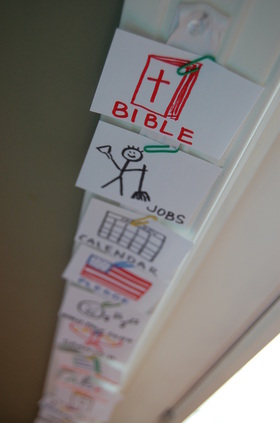
It's November, and we're settling into a gentle rhythm for fitting school into our days here at home. It takes a little bit to get supplies organized and the posted routine turned into an actuality. It also takes some thought and preparation to take a child who at age four has free exploratory play taking up the majority of his day, to then, by age six, be able to sit down for a structured period of time and apply his mind to learning as well as telling back what he knows. I have found a slow, gentle introduction to one new subject at a time to be the most attainable in our home setting and much preferable to a throw-them-in-at-the-deep-end approach. 
Picture
The lessons
Picture
In progress
School is pretty high on the ‘fun’ list around here, for teacher and student.  I mean that too! Really, who wouldn’t appreciate a guilt-free opportunity to ignore housework and laundry and go read a few really good books for a while each day. I hope and pray that the day I begin to find it turning to drudgery for either party, I would pause for a long hard look and make the necessary changes. How well can learning happen when the mind is overwhelmed or in a state of resistance?
Picture
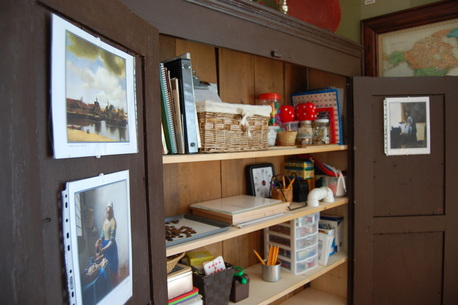
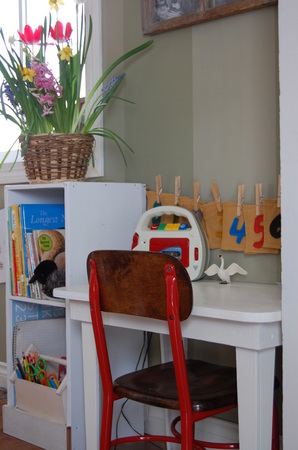
From broken basement discard, to refurbished school-cupboard. A dream come true!
 In an ideal world, where obedience reigns, nothing falls apart and fairies do the dirty dishes, this is what the school portion of our daily rhythm looks like. 


I've heard it called gathering time and morning meeting and other lovely names; we begin our time after breakfast with the same concept. We've found which subjects work well while the little one is dashing between our feet and save the others for nap time. I'm still crossing lots of fingers praying he doesn't grow out of nap time for a long while. It's been an adjustment for me to give up my mid-afternoon time to get some work done around the house. I'm not a fan of change in general, but in this case, the rewards far outweigh any negatives.
Picture
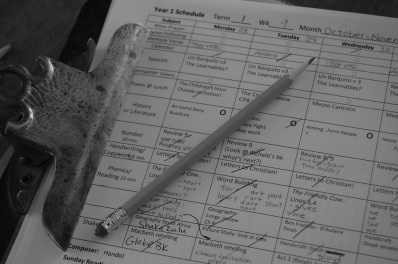
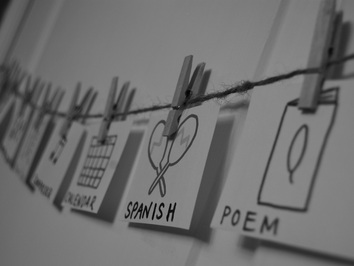
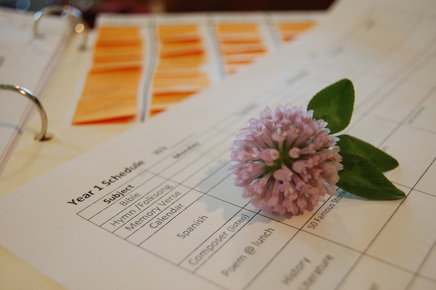
During a morning we try to do the following subjects:
Bible Reading/Prayer
Recite our memory Verse
Calendar-Weather check
Listen to our composer
Spanish lesson
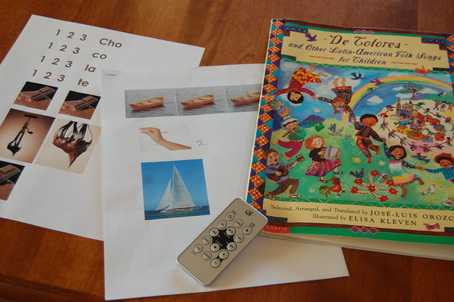
Sing our Hymn/Folksong
Read our daily poem


Chores and outdoor play fit into our morning, as well. Other times we run errands or have play-dates with mom friends and their little ones before lunch. I might remember to grab the cds and then we listen/sing/recite any of the above subjects in the car. We also love books on cd in the car!
Picture
Espanol
Using Ambleside Online Year 1 as our guide, our total time spent in focused learning during a given day is about an one and a half to two hours. I take my planning time (usually about 15 minutes) on Friday when school's over. Then my thoughts from the week we've just completed and where we're headed are still fresh in my mind. I find that it takes me much longer and is harder to get back into the mindset if I wait until Sunday night.
Picture
As soon as baby's down for the afternoon and the table is cleared, big brother and I pop onto the couch and begin with a book and narration, which one depends on the day and our reading schedule.
Picture
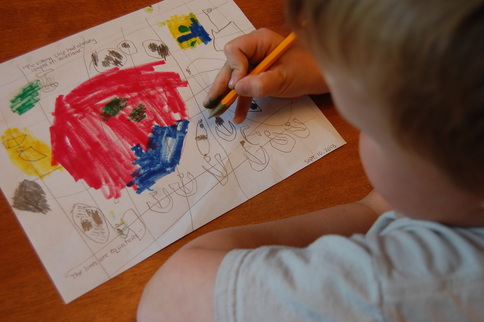
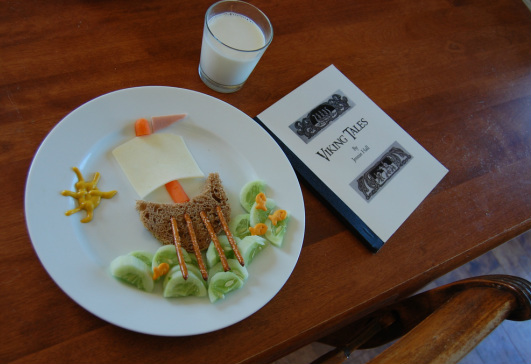
Viking Tales drawing narration
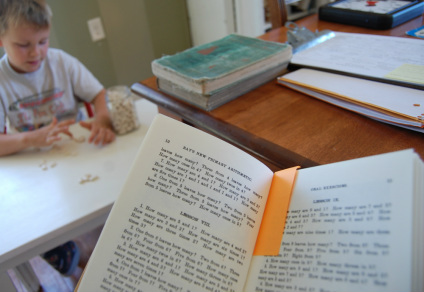
 Short and varied lessons are the keys to keeping attention and interest. We do 5-20 minute lessons depending on the subject.  When he asks, I let him choose which order the afternoon falls into, but, as I can sense that a certain predictability is a comfort to him, we generally follow his favorite order of things. Number comes next,
Picture
Picture
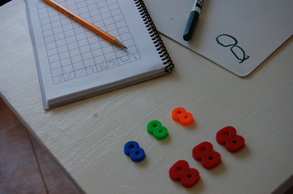
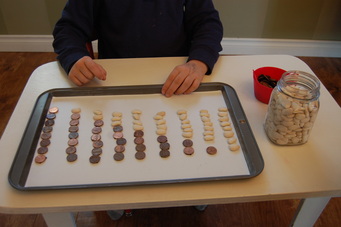
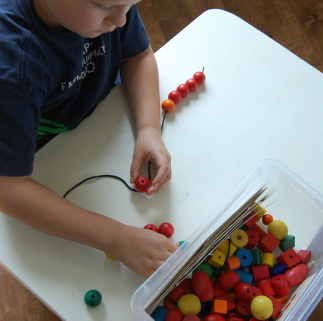
Making 8 with pennies and beans. "Which ones look alike?"
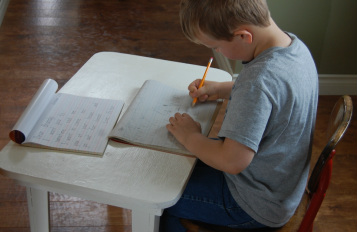
then copywork.
Picture
"Can I please write a letter to Auntie for copywork?"
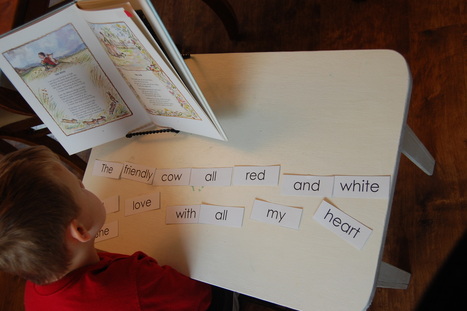
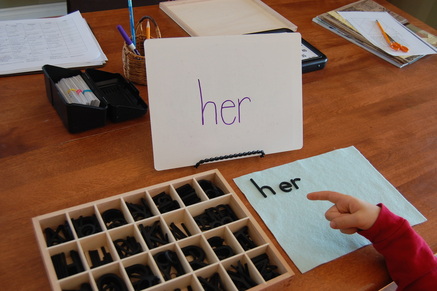
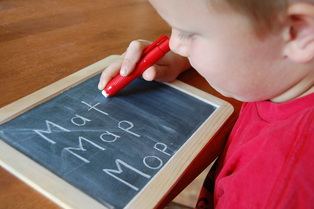
Next he does his letters (aka learning to read), 
Picture
Melt-mom's-heart-first-reading-lessons!
Picture
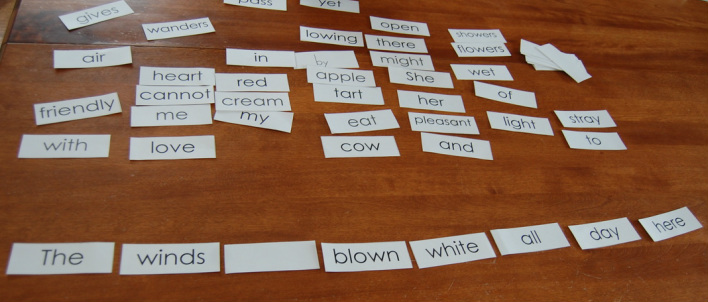
"...She gives me cream with all HER might, to eat with apple-tart."
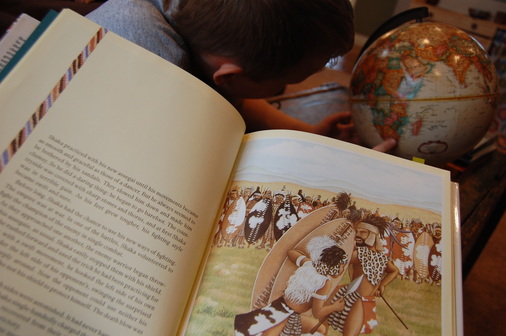
and then another reading and narration. 
Picture
Where did Shaka Zulu live?
Picture
"Mom, this is how Shaka did it."
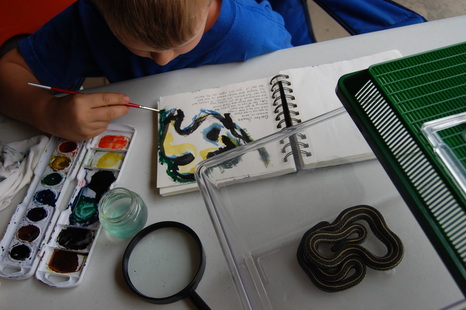
Handcrafting, nature notebooks- a.k.a. science, drawing, outdoor geography, timeline, common placing,  citizenship etc. fit in here depending on the day.  We attempt to do each at least once a week.
Picture
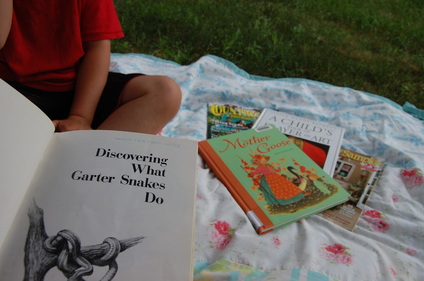
Garter snakes have no ears, we discovered.
Picture
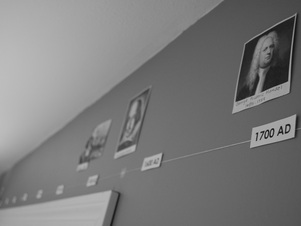
our time line
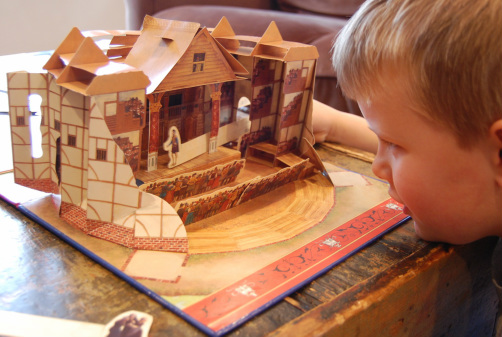
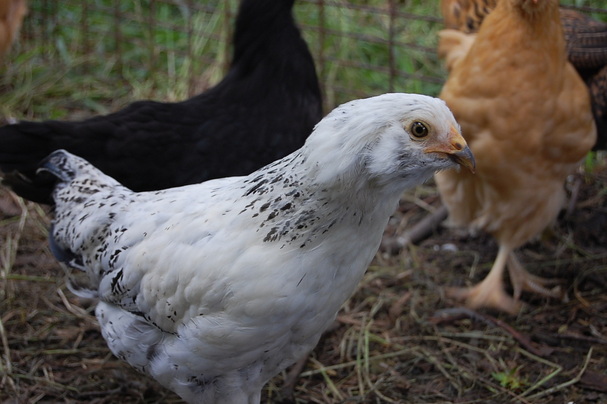
And Shakespeare comes last. Often baby wakes up and does Shakespeare with us. And that's it for school! We used to head out and pick eggs after this. I 'm already looking forward to resuming that part of our daily rhythm with new birds next year and listening to contented chicken noises and giggling at their antics once again. 
Picture
Playing at The Globe Theatre. "I want to be Banquo."
Picture
Numbers in real life
The majority of the time the teacher role falls to me. Dad likes to be involved in school, more than just, "We did this or that today," but among his many bread-winner responsibilities he doesn't have much chance to dive too far in.  It makes sense for me to help offer opportunities for him to connect to what we're doing.
Picture
Reading Peter Pan and dressing the parts
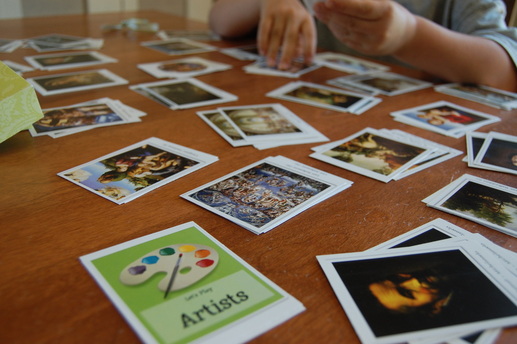
 One evening I set out an 'assignment' for suppertime, a Picture Study narration that had already been assigned to us for our TBG community.  It was very fun to sit back and listen to it happen.  They looked quietly at a beautiful print from Vermeer.  Afterwards, these are a few of the comments I heard. 
"There was a box on the table." 
"It was brown." 
"No, Dad, it was blackish brown." 
"She had a letter in her hand." 
"Ya, it might have been a letter from her husband."
 "There was some cloth." 
"No, that's the table. It was blue." 
"Like her dress!" 
"Let's look at it again. Oh, I see what you were talking about that was a hook on her face. It's her hair, a curl."
"It's hard to see." 
Another recommendation I've heard for dads is to keep a read aloud book going at all times, one they can pick up and read to the kids whenever it works. We're using the free reads on our list for some of our 'dad books.' It's an opportunity not to be missed!
Picture
And baby gets his share of stories too...
"...let us consider where and what the little being is who is entrusted to the care of human parents. A tablet to be written upon? a twig to be bent? Wax to be moulded? Very likely, but he is much more-- a being belonging to an altogether higher estate than ours; as it were, a prince committed to the fostering care of peasants."
Picture
Picture
Picture
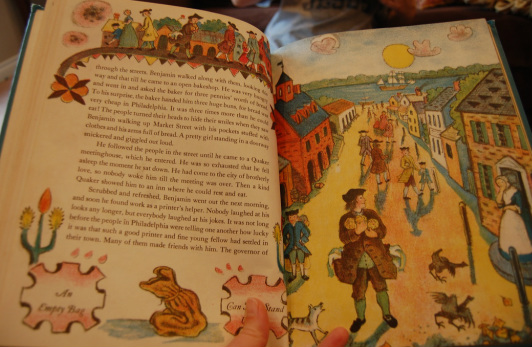
Our favorite Poor Richard's Almanac quote: "Men and melons are hard to know." After we read this D'aulaire on Ben Franklin, DH and I watched the HBO miniseries John Adams bringing the famous revolutionary to life for me!!
Picture
"...mothers owe a thinking love to their children... 
how shall this heart, this head, these hands, be employed? 
to whose service shall they be dedicated?"
Picture
Oh, the stories we get to read!!!
Picture
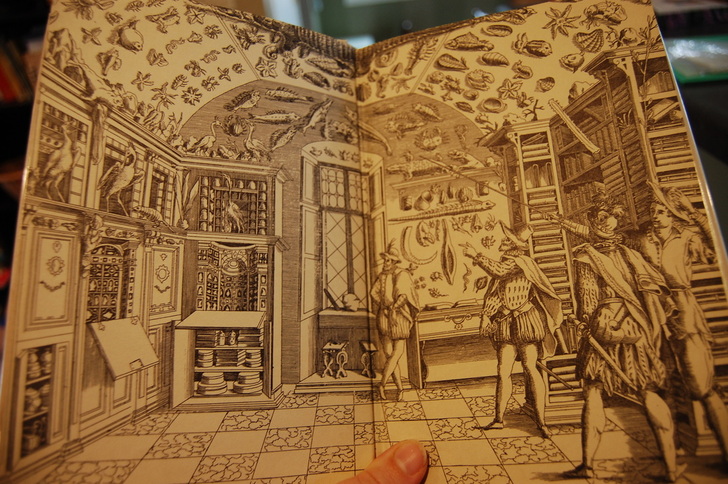
Wishing we could step into this nature collection
17 Comments

The Admiral and I

10/14/2013

0 Comments

 
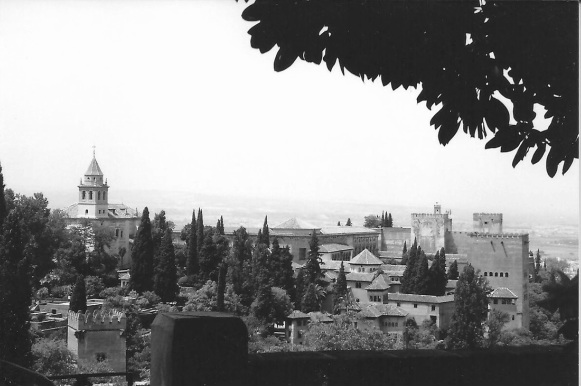
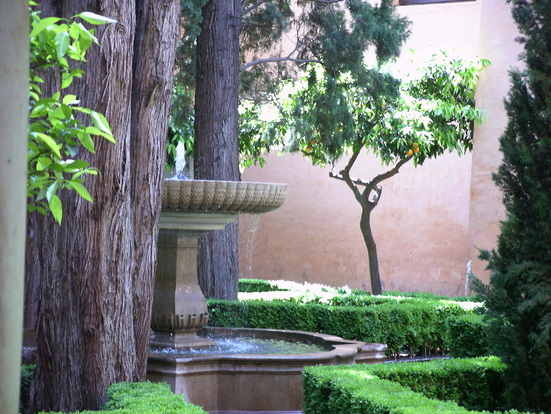
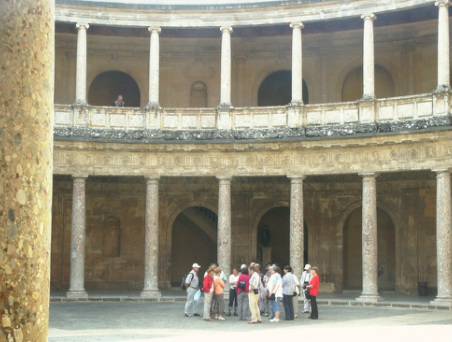
Seven years ago when I stood on the soil of Granada, Spain, or more specifically in the halls of the Alhambra castle,  I had no idea it was the very place Columbus had long ago asked King Ferdinand and Queen Isabella to fund his voyage in which he discovered the New World. 
Picture
I look forward to Columbus Day in a fresh way after having read some wonderful living books about the life of this impressive hero who earned the title Admiral of the Ocean Sea.
Picture
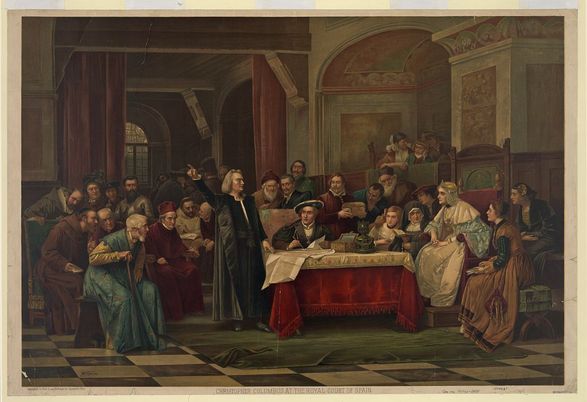
Chistopher Columbus at the Royal Court of Spain, by Václav Brožik c.1884
Picture
As the story goes, Columbus waited until the Spaniards conquered the Moors taking control of Granada and the Alhambra.  The king and queen then had the means to fund his journey to the Orient. 
Picture
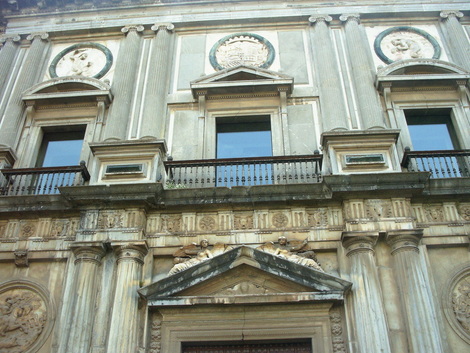
See the castle in the background? I wonder, did the D'Aulaire's visit Alhambra too?
Picture
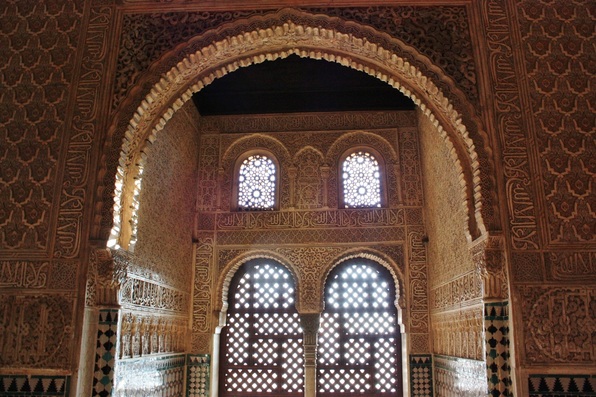
In true tour guide fashion, here we are in The Hall of the Ambassadors (Gran Salón de Embajadores,) the room where it is claimed that Columbus was received by the King and Queen. 


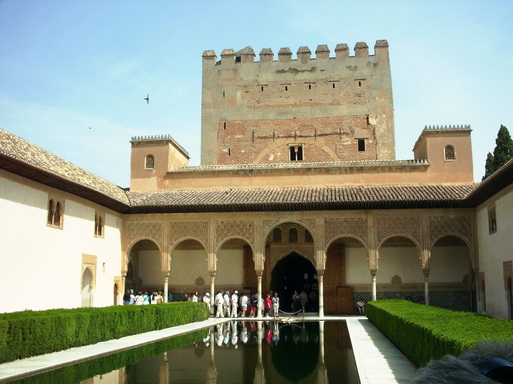
A visitor here would have stepped from the glaring Court of Myrtles into this dim, cool, incense-filled world, to meet the silhouetted sultan. Imagine the alcoves functioning busily as work stations, and the light at sunrise or sunset, rich and warm, filling the room.
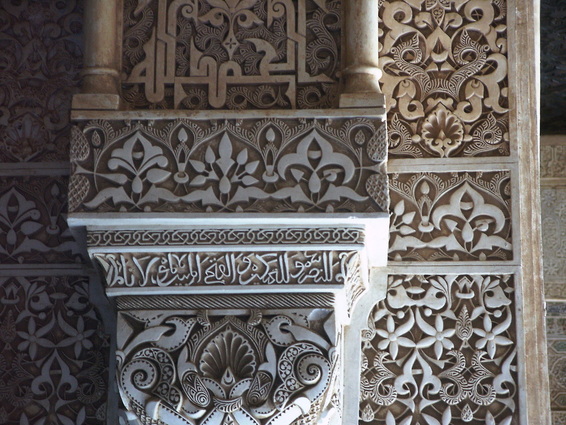
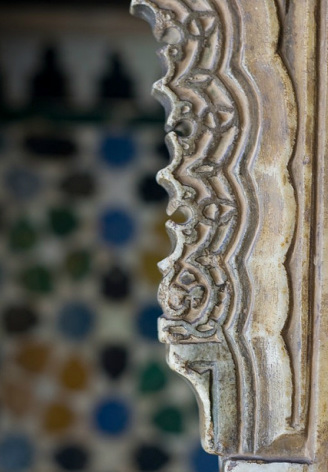
Note the finely carved Arabic script. Muslims avoided making images of living creatures — that was God's work. But they could carve decorative religious messages. One phrase — "only Allah is victorious" — is repeated 9,000 times throughout the palace. Find the character for "Allah" — it looks like a cursive W with a nose on its left side. The swoopy toboggan blades underneath are a kind of artistic punctuation setting off one phrase.
In 1492, two historic events likely took place in this room. Culminating a 700-year-long battle, the Reconquista was completed here as the last Moorish king, Boabdil, signed the terms of his surrender before eventually leaving for Africa.
And it was here that Columbus made his pitch to Isabel and Ferdinand to finance a sea voyage to the Orient. Imagine the scene: The king, the queen, and the greatest minds from the University of Salamanca gathered here while Columbus produced maps and pie charts to make his case that he could sail west to reach the East. Ferdinand and the professors laughed and called Columbus mad — not because they thought the world was flat (most educated people knew otherwise), but because they thought Columbus had underestimated the size of the globe, and thus the length and cost of the journey.
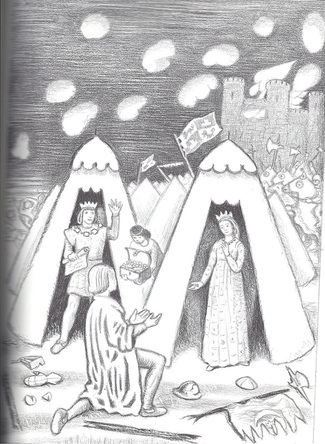
But Isabel said "Sí, señor." Columbus fell to his knees (promising to pack light, wear a money belt, and use the most current guidebook available). quote here. 

Picture
In that relational way, those newly learned facts and  ideas hung themselves on the pegs of previous experiences in my brain.
Picture
My imagination is weaving all sorts of interlocking webs as I learn more from  here and there.
Picture
 All these tidbits are fitting in to create that sweeping panorama of history in my mind. 
Picture
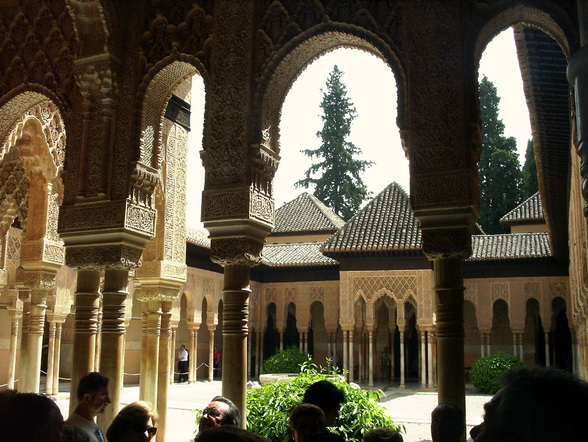
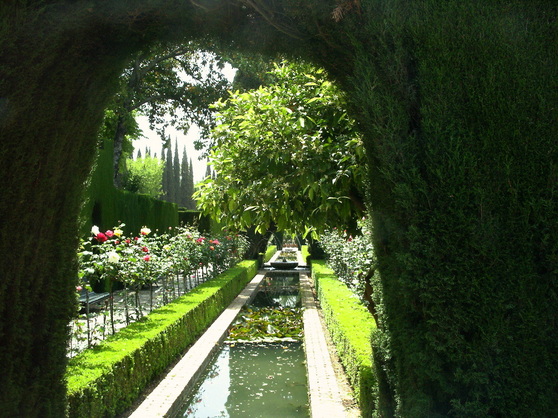
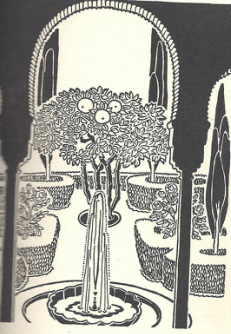
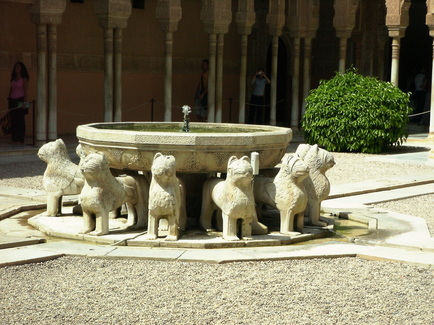
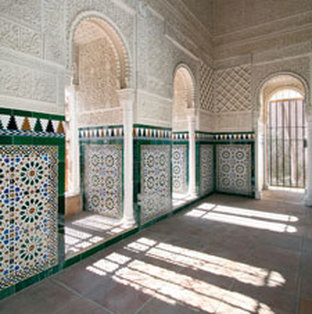
I remember this stunning castle  and the way it filled my senses, the tinkling fountains the smell of orange blossoms and jasmine, the cool halls and intricate carved archways. I bought the book Tales of the Alhambra by Washington Irving in the bookshop at the end of our 5 hour tour. He wrote these little tales of Spanish history during his stay at this beautiful palace when it was no longer the main housing for royalty but used by a lower-ranking military official.  Reading it is like taking a little stroll with him through the Spanish countryside. 
Picture
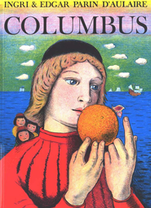
Not too long ago I picked up a kids' pop-up book with words from Columbus' own journal which my son has  enjoyed. 
I also found this sweet storybook of Spanish folktales gorgeously illustrated by Emma Brock.  Spain, and Columbus... it all weaves together in a fascinating way, doesn't it? 
Picture
Picture
Picture
Picture
Picture
Picture
Picture
For a more detailed tour of Alhambra, look here and here. 
Picture
Picture
Photos in this post are from around the web as well as out of my own camera :)
0 Comments

We're reading

10/3/2013

1 Comment

 
the soulful poetry of Henry Wadsworth Longfellow this term.
Picture
                                                Be still, sad heart! and cease repining;
                                                Behind the clouds is the sun still shining;
                                                Thy fate is the common fate of all,
                                                Into each life some rain must fall,
                                                                 Some days must be dark and dreary.
Picture
1 Comment

Starting with the Simple Things

9/3/2013

15 Comments

 
Picture
“I am beginning to learn that it is the sweet, simple things of life which are the real ones after all.” 
-Laura Ingalls Wilder
"Simple, not simplistic." These words as they relate to the methods of a living education have stuck to me since the retreat this summer. I see it over and over, and again this weekend while talking to a friend it came up, "We sure tend to over complicate things, don't we?" Umm, yes. 

Simplicity. I see it as a repeated theme especially in the ideas that make up a living education. It may take a little bit to clear away the educational clutter and get to the presiding idea, but after completing our first official day of First Grade, I can't help but cherish the great value this kind of a journey holds!
Picture
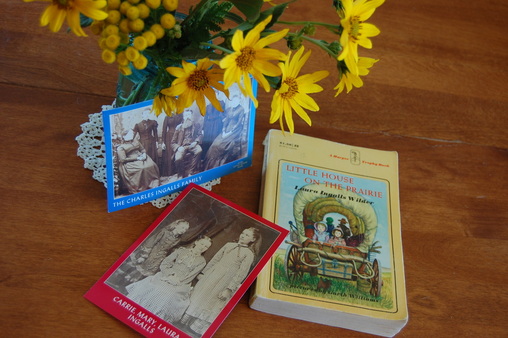
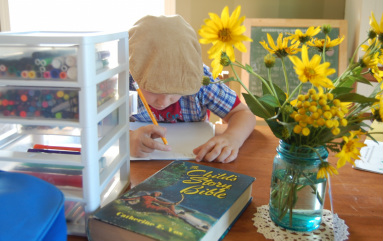
Our first Yr 1 free read from the Little House series happened this summer. The photos in this post are a conglomeration from the Laura Ingalls Wilder Museum we recently visited, as well as the end of our summer and our first day of First grade!
As we begin, with AO Year 1 booklist and schedule in hand, there are still some blanks left for me to fill in based on my ideas of what will best fit our family. One of those main slots to fill was the box that said Phonics/Reading. My starting point here was to re-read Mason's own words in Volume 1 pg. 199-222.

I read through some of the recommendations and PR articles relating to the teaching of phonics.  After browsing a handful of curriculums none seemed to be the right fit for us. 


What I was looking for was something that mirrored the simplicity, yet rigor of the method described in the PR article titled First Reading Lessons which is essentially the same as what is described in Volume 1.

I knew that my son, with his excitement mounting, would work best if starting from wholes and not pieces of words.  The new words he would learn had to be linked to the preexisting and meaningful idea he already had possession of from his vocabulary gained from from the variety of real life experiences we had given him since his toddlerhood.

The article recommends starting phonics with the word 'an' and introducing it in the following steps: 
  • "This is the word 'an' like you hear when we say 'an orange' 'an apple' 'an egg.'"
  • Then the child should take a mental picture visualizing the word 'an'. I was reminded of the observational skills we began when he was a small child with the mental 'picture painting'  while out on nature walks or perhaps during picture study.
  • When you're sure he's got it, have him read the word out loud. 
  • Next we move on to the point where new words are built from the existing word. 'pan' 'man' 'can' etc.

This is simple, with the clutter cleared away from the usual phonics lesson I had encountered. But, only 1 lesson is given as an example. Word building with 'at' and 'It' are mentioned, but it's left up to the teacher after that to fill in the rest until the child has a collection of 1,000 words, or so, that are his 'own possession' which he will 'regard as old friends whenever he meets them in a line of print' such as in the church bulletin or a magazine while waiting in line at the store. 

Picture
Inside the church where Laura encountered her first real Christmas tree.
Free and Printable. Two words homeschool moms like a lot, especially when planning a school year. There are zillions out there. Right? Not simple. That's why I am so thankful for this philosophy that grounds me.

 Education is an Atmosphere, a Discipline, and a Life. 

I won't  put any free printable in front of my son unless it furthers one of those aspects of our education in a meaningful and beautiful way. It's for my sake as well. At this point, I'd like to point you to a free printable that I found to be most helpful in planning out the phonics or word-building lessons that followed the example above. 
Picture
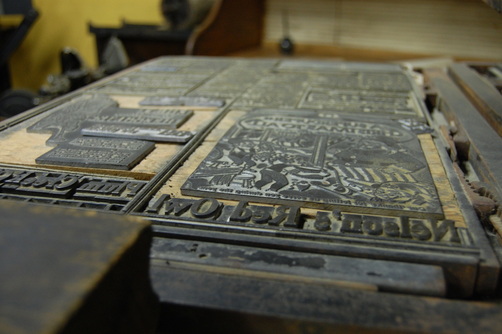
Laura began her career writing for newspapers. Ah, the beautiful old printing press...
Something I read earlier had made mention of the (above) cards on authoress Jan Brett's site. Bingo- no curriculum needed anymore! I had my next 30 lessons, or so, all mapped out for me on these sweet little cards, illustrated even.

I like to work off a descriptive plan, at least until I'm comfortable with a lesson, so that I am free to observe and be aware of my son's needs or hesitations during the lesson rather than fumbling through what I am going to say. So, I ran over to the school supply section and picked out a sturdy notebook (hoping it will last until my second is ready to read) and scripted out a page with our first week of 15 minute lessons using the format from the PR article above and the word cards from Jan Brett as my guide. I numbered our cards starting with the ones that are complete words like 'eat'  'ick'  'ice'  'on'  and moved to the word endings like 'ail' to make 'pail' and 'bail' or 'ake' to make 'bake' or 'cake.'


And there we had our phonics lessons for well into Term 1, or at least until he's ready for the First Reading lessons are the next step described in the article. 
Picture
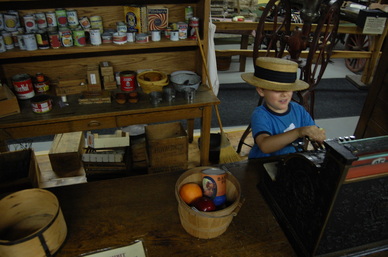
in the general store
As far a buying materials, all we really needed was our box of letters with multiples of each and a notebook for my son to keep his collection of words in. 

I thought if we needed a little variety, we might put his words from any given lesson in one of those little flip books, that he might care to read to Dad or Grandma later on when they ask how school is going. Or, when we get to the point where we know enough to make simple sentences, we might write and illustrate a mini book for fun or a gift! I will base that on his interest, of course. 
Picture
After these few pre-reading lessons where his word collection is built up, we'll move ahead with those first reading lessons as described and modeled later on in the above PR article and Volume 1. 

It is a lovely thing to have a plan in place, and freeing to have one based on a philosophy that is so deeply meaningful to our family.  

You might be interested in my two previous posts on Beginning Reading, what we have done with our son up until this point here and here.  I hope to share more about how that first lesson when we get there but I anticipate it looking a lot like these 2 blog posts from friends.


I'd love to hear from you, so please leave me your comments below!
Picture
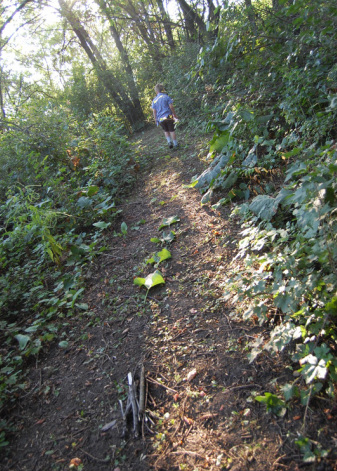
Following the trail marked clues to a first day suprise!
Picture
Picture
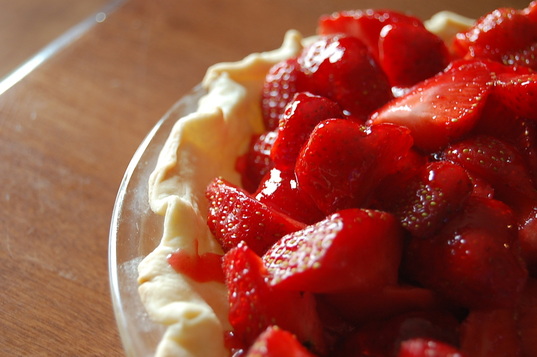
Only to make the first day special, lunch a la Pinterest
Picture
Picture
Picture
Picture
Picture
Picture
Picture
Picture
Picture
Picture
Picture
Picture
15 Comments

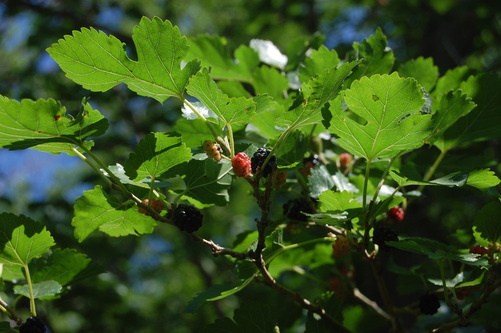
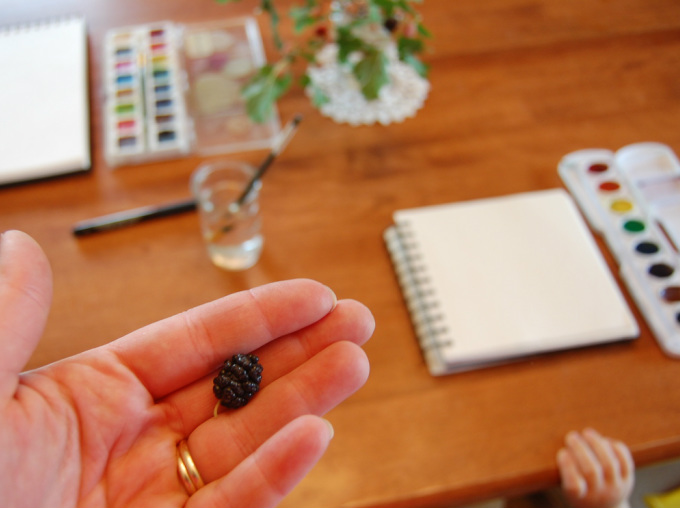
berries and blossoms

7/23/2013

4 Comments

 
Picture
Picture
Picture
Picture
Picture
Picture
Picture
Picture
Picture
Picture
4 Comments

Tendrils of Attachment

7/9/2013

9 Comments

 
Picture
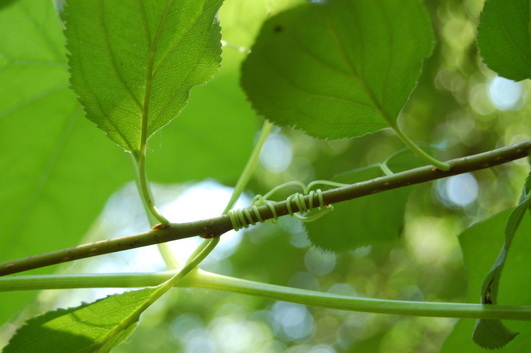
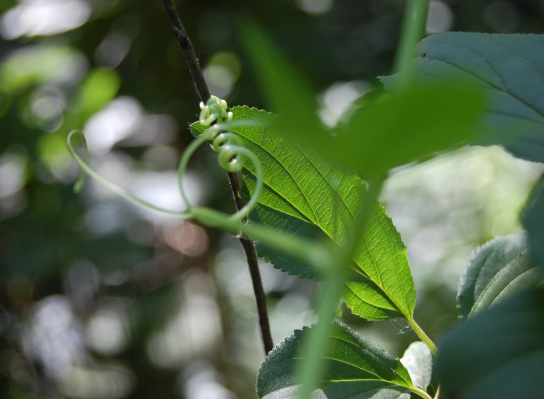
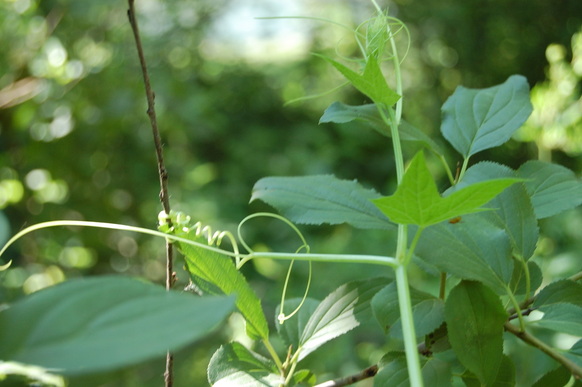
"This is not a bewildering programme , because, in all these and more directions, children have affinities; and a human being does not fill his place in the universe without putting out tendrils of attachment in the direction proper to him."
Picture
"We must get rid of the notion that to learn the 'three R's' or the Latin grammar well,
a child should learn these and nothing else.
It is as true for children as for ourselves that, the wider the range of interests, the more intelligent is the apprehension of each." Mason


History is one of those areas of interest, and our summer book study touched on it recently. Summer is also a great time for vacations and day trips to places that might
bring history to life for a young child. I see these kinds of first experiences as
the hooks in my child's mind that the facts and information will hang on
as he reads and learns more later in his schooling.
Picture
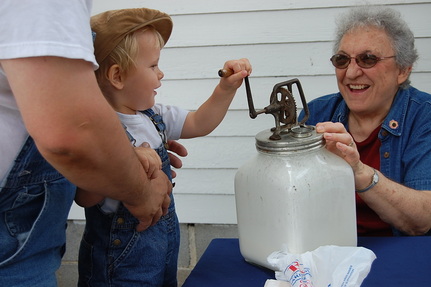
Churning butter age 3
Picture
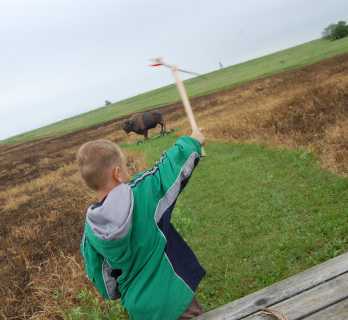
Buffalo hunting with an atlatl age 5
"Perhaps the gravest defect in school curricula is that they fail to give a comprehensive, intelligent and interesting introduction to history."

"It is a great thing to possess a pagent of history in the background of one's thoughts. We may not be able to recall this or that circumstance, but, the 'imagination is warmed;'"

"The present becomes enriched for us with the wealth of all that has gone before."
-quotes from C. Mason

In these early years of preschool and kindergarten we have not formally begun a history thread in our school time. We have done lots of gentle introduction of the ideas that will lead into Year 1 when we start more formal history.  I took a peek through the books we will begin with. My 'peek' turned into me being sucked in and when I looked up most of an hour had passed. A well written tale of history really comes alive and I'm looking forward to reading them with my son.

So during kindergarten and preschool, what have we done for introducing history?

The first thing is our daily Bible reading which gives a child a sense of time from the beginning and lots of lovely stories of the men of old and the tests to their character.

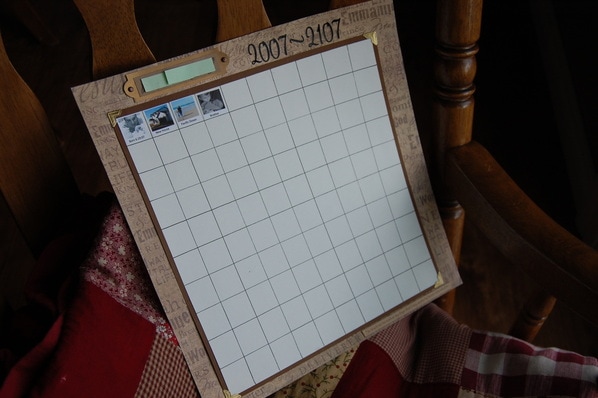
Another big thing was the Century Chart introducing a child to the idea of his own place in the scheme of time and history. (Did I mention that I found some great $2 calendar frames at our local hobby/arts store that fit my 12x12 scrapbook paper perfectly!)

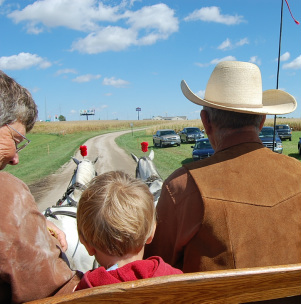
Also we have tried to give our son(s) hands-on, life experiences whenever possible. We cook meals over the campfire occasionally; he rode on horseback, looked through Grandpa's military photo album. We went to History fest reinactments and our town's Mennonite heritage celebration. He canoed on the lake with dad, and is currently caring for a flock of chickens. We hike historic trails and see names and dates carved in the rocks, we walk where indians have walked, visit antique stores, stargaze, float boats in the stream, collect wildflowers, read poetry and stories and watch rabbits and deer nibble in the backyard.  All of these things can be related to the lives of people in the past in one way or another and enrich future reading/learning. I'm leaving the relating/tendril/attachment thing up to the Holy Spirit and not lecturing him on the botanical collection of Lewis and Clark or anything like that.
Picture
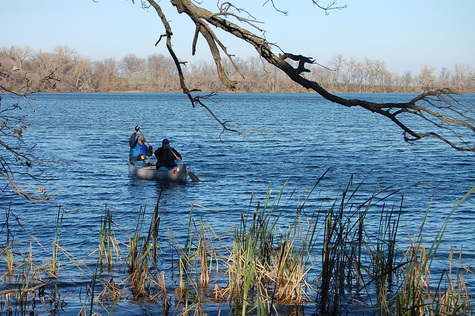
Canoe ride age 4
Picture
Just like Laura Ingalls in the wagon
Our summer reading offered us a few points to remember when teaching history:

- Our aim is honesty and knowledge of the truth
- Choose as accurate, well-written books as possible; read them to him and when old enough, have him retell the story
- Give the young child leisure to explore an age in detail
- Let him react himself
- Take children to the places where things happened whenever possible (though to be educated by living history, it is not solely dependent on such a visit to make the event
live and breathe)

-The curriculum should be planned as a consecutive whole, so that as the child moves along, he gains a sense of the broad sweep (of history)

We have begun reading The Childhood of Famous Americans series of history biographies. Grandma and Grandpa took a trip to The Alamo and so we read the one on Davy Crockett (a huge hit here!!) They also took a trip up the cable cars in the Swiss Alps and we looked at their photos, heard their stories and read The Magic Meadow and The Apple and the Arrow.

Another aspect of history that I am excited to begin when he is older, is the Book of Centuries, a timeline mixed with a personal narration of the 'pagent' as we go through it little by little. I hope to purchase this lovely book to hold ours.

I look forward to re-learning some of this alongside him. I can already see  these ideas twining out and taking hold like those tendrils, and once we begin to sweep through our more planned and consecutive whole of history, I believe it will just get that much richer in that vivid imagination of his. 
Picture
Picture
9 Comments

First Steps to Reading: the kindergarten continuation of an adventure that began in babyhood

5/23/2013

4 Comments

 
 “Many persons consider that to learn to read a language so full of anomalies and difficulties as our own is a task which should not be imposed too soon on the childish mind. But, as a matter of fact, few of us can recollect how or when we learned to read: for all we know, it came by nature, like the art of running; and not only so, but often mothers of the educated classes do not know how their children learned to read. ‘Oh, he taught himself,’ is all the account his mother can give of Dick’s proficiency.” - CM 1/199

“But the learning of the alphabet should be made a means of cultivating the child’s observation: he should be made to see what he looks at.” - CM 1/201
Picture
From the very first day 'official' day of kindergarten, when I, teacher/mom, left a welcome note on the chalkboard and we ate sack lunches on the back steps, read stories and baked a batch of cookies together, to the mid-year tweaking of the daily routine, to the latest decisions on where to store supplies out of the reach of chubby little 18 month old little brother's hands, this year has been filled with challenges, delight, and lots of fresh air!
In this post, I'm setting out to document a part of that process that I am witnessing here at home, the exciting 'learning to read' phase that has begun! After reading Volume 1, I felt free to be purposfully relaxed about the process so as not  to burn either of us out. I hope to remember some of how this  went for when my 2nd is ready for reading, though I know the learning process is as individual as the child. Regardless, here's what I've observed.
Picture
Posted school routine which Mason says plays a NECESSARY role, Yep!
I remember asking my professor, while everyone else was furiously taking notes, in our reading methods class in college, "...but how do they actually learn to read?" If I remember right, she chuckled and never really answered my question, but instead handed us some activities to use in our future classrooms. Now, here I am, a mother, watching it all unfold before my eyes with my own child, and I'm agreeing with that 'mystery' aspect that I was left with in college. It used to freak me out a little, back when I had my first classroom, I wanted firm sureness,  but I now view it as one of the awesome intricacies of how our brains were created to capture and lay hold of information. I probably will never fully understand that. What I do understand is the part where the Holy Spirit  leads my child's mind to just the right knowledge at just the precise time. The best part is that, as the one who is with my child daily, I get to assist in that divine process as opportunities are revealed to me.  It's a pretty cool experience, when you think about it. Read Mason's 6 volumes for more on that.

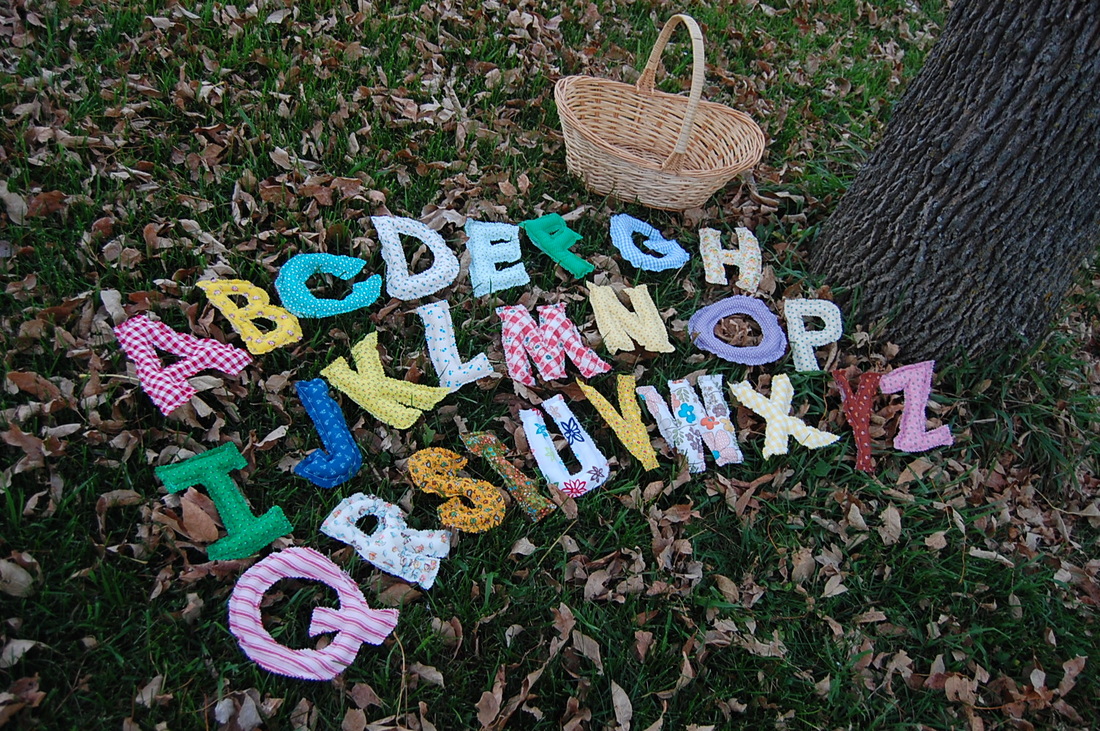
Here's how it began. As a baby/toddler my son had some letter toys. I sewed some big cloth ones; he had a wooden puzzle and ABC blocks. We hung his name on the wall in his room, and he began to recognize and learn those letters almost without prompting. It was like curiosity got the better of him, and he had his own interest in those ‘shapes’ that he was seeing repeatedly in the world around him. He would ask me, “What’s that letter, Mom?” I never drilled him with flashcards; we didn't watch alphabet DVDs. We learned the letters A, J, Q, K while playing card games. He knew D was for Dad, and M for Mom. and we read S-T-O-P every time we walked to the end of our road. Simple.
Picture
Play station
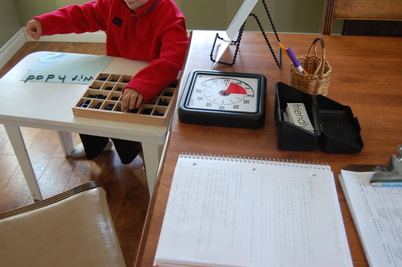
At the beginning of the Kindergarten year I began to make 'letters' a more focused thing. We had 10-15 minute ABC lessons 3x’s / wk when we did our ‘school’ days. We really only did the fun things like play ABC Go Fish, put together a letter train puzzle, and read ABC books. We sang the Alphabet song while putting the ABC refrigerator magnets in order, and then we tried learning the song backwards, ha!  I found some ABC dot-to-dots; we took sticks and made giant letters outside, or drew them in the dirt. He learned to write his own name during this time.  One purchase we made was these wood pieces. They helped to mentally visualize the letters' shape. 

About halfway through the year, I could tell his interest was growing; he began to fill up piece after piece of scratch paper with E’s, P’s, and T’s etc. and explain how he was being a book writer. So, keeping it interest driven, we went a little further, and I started loosely doing a letter of the week lesson. This I kept very simple, practical and something that requires little to no prep! I didn't want to weekly find library books to go along with each letter, or remember to print off a coloring page, or spend time pulling together craft supplies for a cute pinterest letter project. I didn't even put the alphabet up on the wall.
Picture
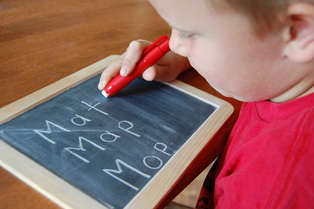
My intention with the letter a week (or so) was for visualization and to help his hand muscles learn write them properly. To begin a lesson, I modeled the letter on my own piece of paper or wherever, and then he'd try writing in the air or a tray of sand. I switched to cornmeal and now we use salt because it seems more sanitary and cleans up better. We use a personal sized chalk board and did the 'wet, dry, try' method modeled after this curriculum, which I didn't buy but did read up on.  After I'm sure he's able to form the letter correctly, he writes one capitol and one lowercase in his own special word notebook as best as he can. We made our own notebook with paper like this. Other days we play a game, ABC-Sound Go Fish and consonant dominoes are current favorites, or we just play around with our movable alphabet. I'm still on the hunt for the perfect set of ABC game cards with beautiful illustrations on them.  For now, I like these free printable ones. Each lesson is no longer than 8-10 minutes- no exceptions!

The lessons flowed like a breeze until we hit 'Ss." I noticed frustration and that the fun seemed to be out of the lesson. So I completely backed off. I didnt even mention the letter lesson for a few weeks. We instead played games, and read together on the couch. Once while waiting in line, we drew S in the air. Once while finger painting we made S on the paper. Once while counting for fun,  I drew on paper for him an S next to a 5 next to a 2 and we identified each one. After a while I pulled out the letter lesson (as above), just to test the waters and he wrote his Ss with not a worry! Now we're off again to finish up the rest of the alphabet.


My other goal during our lessons is for him to give focused mental effort for a short period of time, a gentle building up to first grade work. In the context of everyday life, the letters we are learning pop up quite often, of course. I love seeing how he's noticing. If I'm observant I can tell exactly what he already knows, and I don't have to quiz him over it in any way. I think Mason would describe it in her own lovely way, as a living idea that is forming its due relations. 
Picture
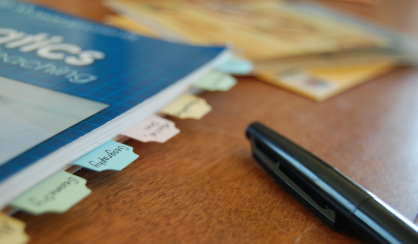
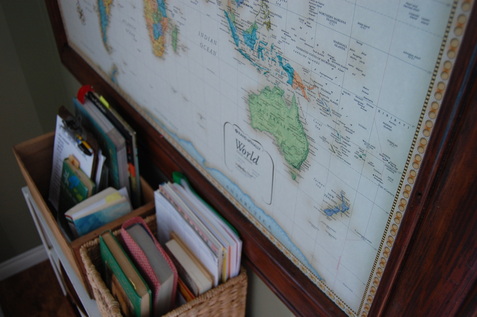
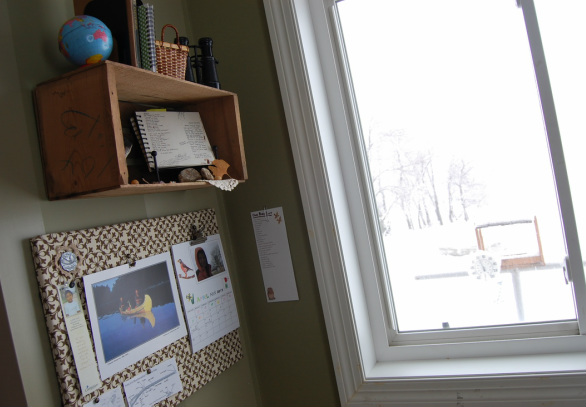
Various notebooks on the nature shelf with picture study and calendar below. Finally an arrangement that works! (for now)
Other times during the day I have some ABC things around that he can pick up as he wants. Before I mention any, I just want to say that with a little creativity, I believe a child can have a quality education without spending a fortune on curriculum or manipulatives.   On that note, here are 3 we like:
  • We made our own version of these language objects by raiding Grandma's craft cupboard and cake decorating supplies. I might make labels to go with them. I saw something similar on a bulletin board in a kindergarten room once.
  • - I love these images of Nature's Alphabet (free printable.)
  • My kids like this magnetic toy, though I wish the pronunciation was clearer.

So, for the pre-reading skills level, this is what we're doing, nothing elaborate. Next will come those very first reading lessons, which I am really looking forward to doing when he's ready! I hope to follow and document how we use Mason's method as outlined in Volume 1 and described well in this series of lovely blog entries. I am also liking this book for possible future phonics instruction.  

Teaching my kids to read was one of the things I was most looking forward to experiencing when we started homeschooling. Now there are so many things I look forward to, I wouldn't even know where to start!

“Reading presents itself first amongst the lessons to be used as instruments of education, although it is open to discussion whether the child should acquire the art unconsciously, from his infancy upwards, or whether the effort should be deferred until he is, say, six or seven, and then made with vigour.” - CM 1/200
4 Comments
    Picture

    Welcome!

    "I am recording this so that future generations will also praise the Lord for all He has done."            -Psalm 102:18

    I am a mama to 2 sweet brothers who aspires to a "thinking love" toward my children.  

    Take a peek into our  journey towards a living education inspired by the writings of Charlotte Mason.

    Be sure to leave me a comment if you're inspired!


    I prefer to keep my text and images right here. Please don't copy without permission. Thanks!
    Picture
    Picture

    Categories

    All
    Art/picture Study
    Baby
    Bible
    Book Of Firsts
    Composer Study
    Forigen Language
    Garden
    Geography
    Getting Started
    Habits
    Handicrafts
    History
    Holidays
    Hymn/ Folksong
    Kindergarten
    List Of Attainments
    Living Books
    Living Books
    Math
    Mother Culture
    Nature
    Notebooks
    Our Story
    Photography
    Poetry
    Preschool
    Reading
    Recipes
    Refreshment
    Science
    TBG Community
    Testing
    The Living Education Retreat
    Truth Beauty Goodness
    Year 0
    Year 1
    Year 2

    Subscribe 

    My new posts delivered straight to your inbox!
    Picture

    Enter your email address:

    Delivered by FeedBurner

    Search Here

    Loading
    Picture
    Picture

    Instead of T.V.

    Librivox free audio books
    Seeds of Family Worship 
    Bible verses put to song
    Storynory free audio stories for kids

    Storyline Online- famous faces read books to kids

    Mister Rogers- episodes online

    RSS Feed

    Previously...

    Picture
    Our Story
    Picture
    Our Year 1 Rhythm
    Picture
    Cloth Diapering
    Picture
    Century Chart
    Picture
    Learning to Read
    Picture
    Wool Felting
    Picture
    Nature with Little Ones
    Picture
    Playful Learning ABC
    Picture
    Living Math
    Picture
    Raising Tadpoles
    Picture
    Homemade Cleaning Recipes
    Picture
    From Caterpillar to Butterfly
    Picture
    Beginning a Foreign Language
    Picture
    Animal Tracking with Kids
    Picture
    Beginning Preschool
    Picture
    First History Lessons
    Picture
    Maple Sugaring with Kids
    Picture
    Children in the Garden
    Picture
    Sloyd handwork
    Picture
    Monarch Miracle

    Archives

    August 2018
    July 2018
    July 2017
    May 2017
    April 2017
    March 2017
    January 2017
    August 2016
    July 2016
    June 2016
    May 2016
    April 2016
    February 2016
    January 2016
    December 2015
    November 2015
    October 2015
    September 2015
    August 2015
    July 2015
    June 2015
    May 2015
    April 2015
    March 2015
    February 2015
    January 2015
    December 2014
    November 2014
    October 2014
    September 2014
    August 2014
    July 2014
    June 2014
    May 2014
    April 2014
    March 2014
    February 2014
    January 2014
    December 2013
    November 2013
    October 2013
    September 2013
    August 2013
    July 2013
    June 2013
    May 2013
    April 2013
    March 2013
    February 2013
    January 2013
    December 2012
    November 2012
    October 2012
    September 2012
    August 2012
    July 2012
    June 2012
    May 2012
    April 2012
    March 2012
    February 2012
    January 2012
    December 2011
    November 2011
    October 2011
    September 2011
    August 2011

    I Participate

    Sage Parnassus
    Picture
    "In this field small efforts are honoured with great rewards, and we perceive that the education we are giving exceeds all that we intended or imagined.”  
                    - Mason
    Picture
    Picture
    Picture
    Picture
    Picture
    Picture
    Picture
    “It may be that the souls of all children are waiting for the call of knowledge to awaken them to delightful living.”             
                   - Mason

    Picture
Powered by Create your own unique website with customizable templates.